
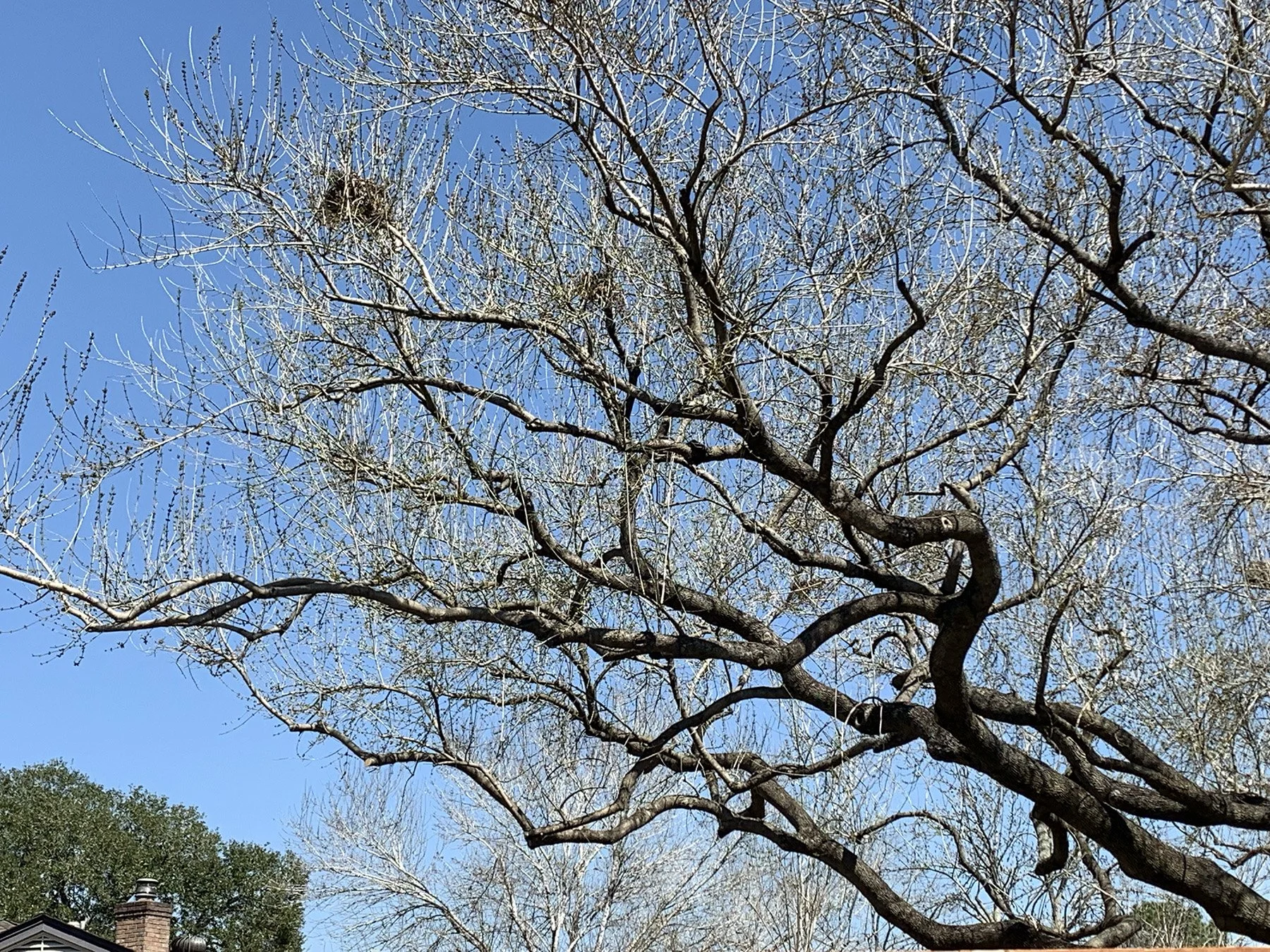
Tree Service in Houston, TX
Houston's tree canopy is one of the best things about the city and one of the more demanding to maintain. Mature live oaks, pecans, and water oaks in the older neighborhoods are decades past the point where routine yard care is enough, and they sit close to houses worth protecting.
Houston Arbor Care has worked across Houston since 1989. Every job is assessed by an ISA Certified Arborist, which matters more on old trees than almost anywhere else, because the difference between a tree that needs removal and one that needs cabling is not something you can judge from the curb.
Older Trees, Different Problems
The tree work Houston needs is not what a new subdivision needs. In the Heights, Bellaire, West University, Memorial, and the Memorial Villages, you are dealing with trees that were mature before most current owners moved in.
Old trees accumulate structural defects. Co-dominant stems that were fine at thirty years become a failure risk at seventy. Large horizontal live oak limbs extend further over rooflines every decade. Included bark forms in tight unions and nobody notices until something splits. Decay pockets open where old wounds never closed properly.
This is why so much of our Houston work is preservation rather than removal. A mature specimen live oak is close to irreplaceable, and cabling, bracing, and structural pruning can add decades to a tree that would otherwise fail in the next hurricane.
What Storms and Drought Have Already Done
Houston's canopy carries visible scars, and understanding them helps explain what your tree is doing now.
Hurricane Ike in 2008 took out an enormous number of trees across the region and structurally damaged many more that survived. A lot of trees standing today carry old storm wounds that have been slowly decaying ever since.
The 2011 drought was worse for the urban canopy than most people realize, and the losses were not all immediate. Drought-stressed trees decline for years afterward, and hypoxylon canker, an opportunistic fungus that only takes hold in already-stressed oaks, spread widely in the aftermath.
If you have a mature oak that has been thinning gradually with no obvious cause, drought stress history is one of the first things we look at.
Construction and Redevelopment
Houston tears down and rebuilds constantly, and mature trees are the quiet casualty. Root severance from foundation work, soil compaction from equipment, and grade changes during a build will kill a large tree, but usually not right away. Decline typically shows up two to five years later, long after the project closed out, and almost nobody connects the two.
Oak Wilt in the Houston Area
Oak wilt is a genuine threat to Houston oaks. It moves through interconnected root systems between neighboring trees and is also carried by sap beetles to fresh wounds.
The practical takeaway: do not prune oaks between February 1 and June 30, when beetle activity and disease transmission peak. Texas A&M Forest Service recommends avoiding that window. If an oak must be cut during that period for safety reasons, the wounds should be painted immediately.
We follow that protocol. Plenty of outfits do not.
Bayou-Adjacent Properties
Properties along Buffalo, White Oak, Brays, and Sims bayous face their own conditions. Bank erosion undercuts root systems gradually, and periodic inundation stresses trees in ways that don't show for a season or two.
Services Across Houston
Tree removal, trimming and structural pruning, emergency and storm response, cabling and bracing, tree preservation, arborist assessment, fertilization, planting, and tree protection planning for builders.
An Honest Assessment First
Plenty of companies quote a removal because removal is the biggest ticket. Connor Bennett, ISA Certified Arborist TX-366130A, will tell you when a tree can be saved and when it genuinely cannot. Family owned since 1989, over 90 five-star reviews.
Other Areas We Serve
In addition to Houston, we serve homeowners and businesses throughout the greater Houston area. Based in Katy, we are a short drive from most of the communities below.
Katy & Cinco Ranch
Katy is home base. We have been based here since 1989 and know its trees as well as any crew working in this area. The soil is heavy Gulf Coast clay that swells when wet and cracks in drought, which stresses root systems in ways that show up slowly. Most of Katy's neighborhoods were planted all at once in the 1990s and early 2000s, so whole streets of live oaks are hitting middle age at the same time and running into the same problems together. Roots lifting driveways and sidewalks, trees planted too close to foundations, and properties near the Addicks and Barker flood pools dealing with inundation damage that doesn't show until a season or two later.
Fulshear, Sugar Land & Pecan Grove
Fort Bend County covers a wide range of tree situations. Fulshear is actively developing, which means younger trees needing early structural work and construction sites where mature specimens need protecting. Sugar Land's master-planned communities from the 1980s and 1990s have trees now at the age where preservation decisions get made. Pecan Grove is established and named for what grows there.
Memorial Villages
The Memorial Villages, Hedwig Village, Piney Point, Hunters Creek, Bunker Hill, and Memorial, have some of the largest and oldest trees in the Houston area. Large wooded lots, mature hardwoods, and properties along Buffalo Bayou where bank erosion undercuts root systems over time. This is where preservation and cabling work matters most. Homeowners here are generally looking to keep a sixty-year-old live oak standing rather than remove it, which is exactly the kind of work an ISA Certified Arborist is equipped to assess properly.
Bellaire, West University & Houston Heights
The inner loop neighborhoods have mature trees on small lots, which changes how the work gets done. Access is tight, crane work is often impossible, and climbing and rigging is the standard approach. The Heights in particular has historic bungalow lots with large pecans and live oaks that predate the houses around them. The teardown-and-rebuild culture across all three areas means construction root damage is a recurring issue, with tree decline often showing up years after the project closed out.