
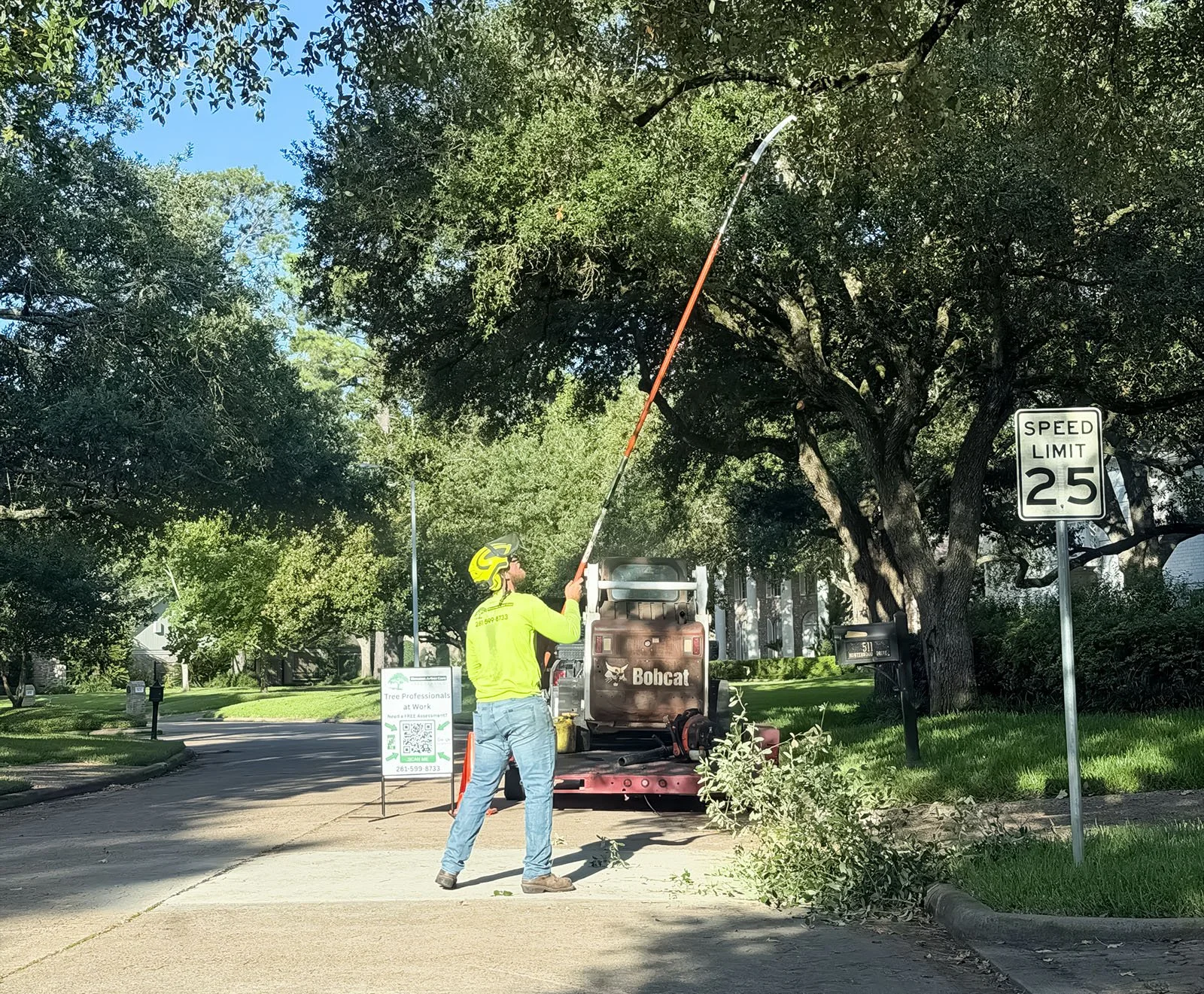
Tree Trimming & Pruning in Katy & Houston
Good pruning is invisible. You should not be able to tell a tree was worked on, only that it looks balanced and healthy. Bad pruning is obvious, and often permanent.
We prune to arboricultural standards, not to whatever is fastest. Proper cuts at the branch collar, no topping, and no removing more live canopy than the tree can afford to lose.
Why Pruning Matters More Here
Gulf Coast trees carry heavy canopies and face hurricane season every year from June through November. A tree with dense, unthinned growth catches wind like a sail. Structural pruning reduces that load and removes the weak, crossing, and dead limbs most likely to fail in a storm.
Pruning also matters for tree health. Removing deadwood limits entry points for decay fungi and insects, and thinning improves air movement through the canopy, which helps in a climate this humid.
The Oak Pruning Window
If you have oaks, timing matters. Oak wilt is a serious fungal disease in Texas, and fresh pruning wounds during the active season attract the sap beetles that spread it. Texas A&M Forest Service recommends avoiding pruning oaks between February 1 and June 30.
We follow that window. If your oak needs work during that period for safety reasons, we paint the cuts immediately, which is the standard precaution.
A lot of outfits ignore this. It matters.
What We Prune
Structural pruning on young and mature trees
Deadwood removal
Canopy thinning and wind resistance work
Crown raising for clearance over drives, walks, and rooflines
Clearance pruning away from roofs, gutters, and power service drops
Corrective pruning on trees that were topped or badly cut previously
What We Do Not Do
We do not top trees. Topping, cutting main limbs back to stubs, permanently damages the tree’s structure, triggers weak regrowth, and creates a bigger hazard three years down the road than the one it was supposed to fix. If someone quotes you a price to top a tree, get another opinion.