
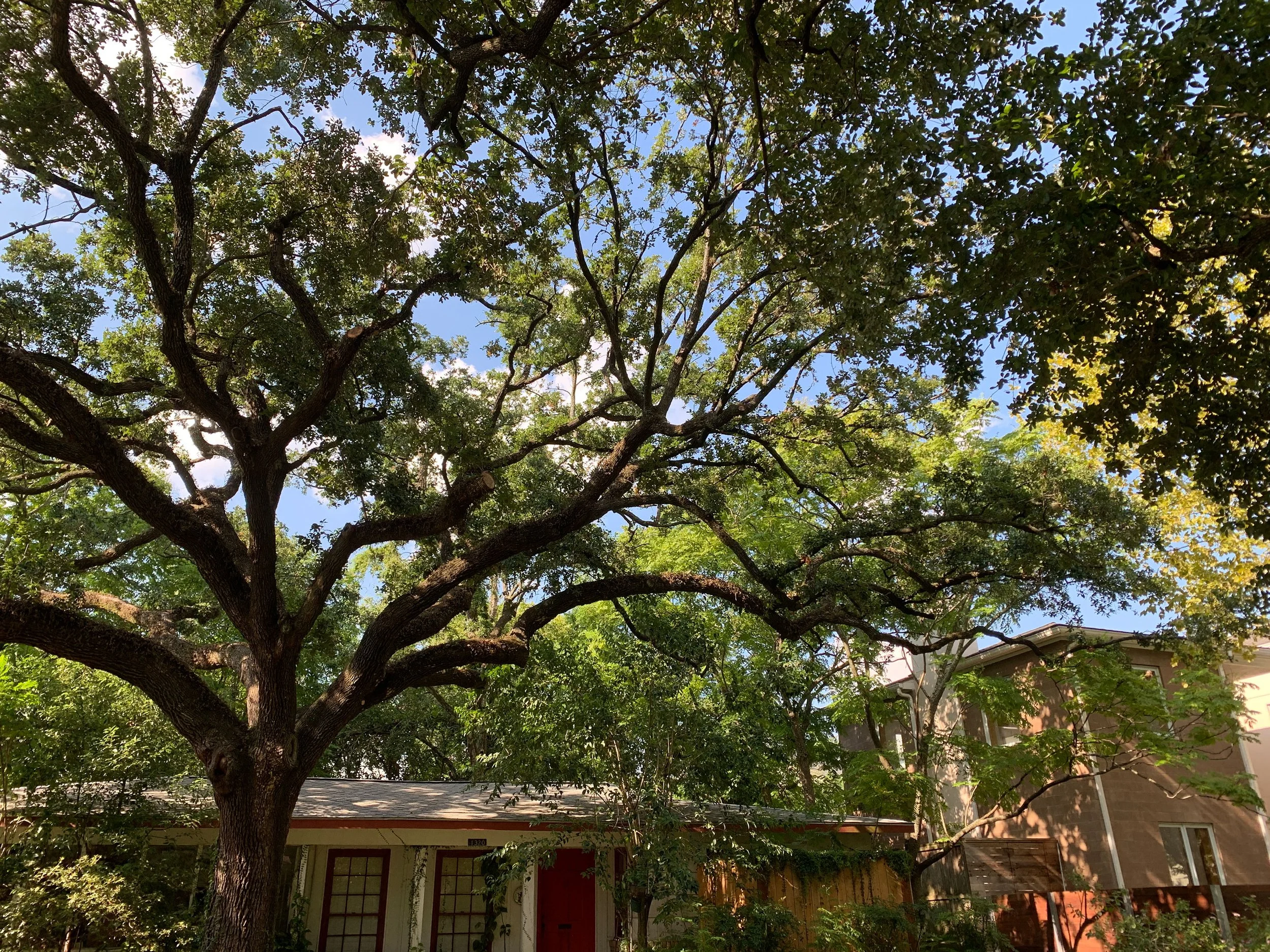
Tree Preservation & Cabling in Katy & Houston
A mature live oak took forty years to get that big. It cannot be replaced in your lifetime. When one is struggling or structurally compromised, removal is not the only option, and it should not be the first one considered.
Preservation makes sense when the tree has good remaining structure, a manageable defect, and enough healthy canopy to sustain itself. It does not make sense on a tree with extensive decay in the main stem or a root system that has already failed.
We will tell you which one you have.
When a Tree Is Worth Saving
Cabling and Bracing
The most common structural fix is cabling, steel cable installed high in the canopy to limit how far weak unions can move in wind, and bracing, rods installed through a split or weak union to hold it together.
Done correctly it can add decades to a tree that would otherwise fail in the next storm.
More on our cabling and bracing page.
Common Tree Health Problems Here
Oak wilt. A fungal disease that moves through connected root systems and by sap beetles. Timing of pruning matters, and so does early identification.
Hypoxylon canker. A stress-driven fungus on oaks that shows up after drought or root damage. Bark sloughing off in patches with a tan or silver-gray surface underneath is the classic sign.
Construction damage. Root cutting, soil compaction, and grade changes during building work kill more mature trees than any disease, and the decline often shows up years later when nobody connects it to the construction.