
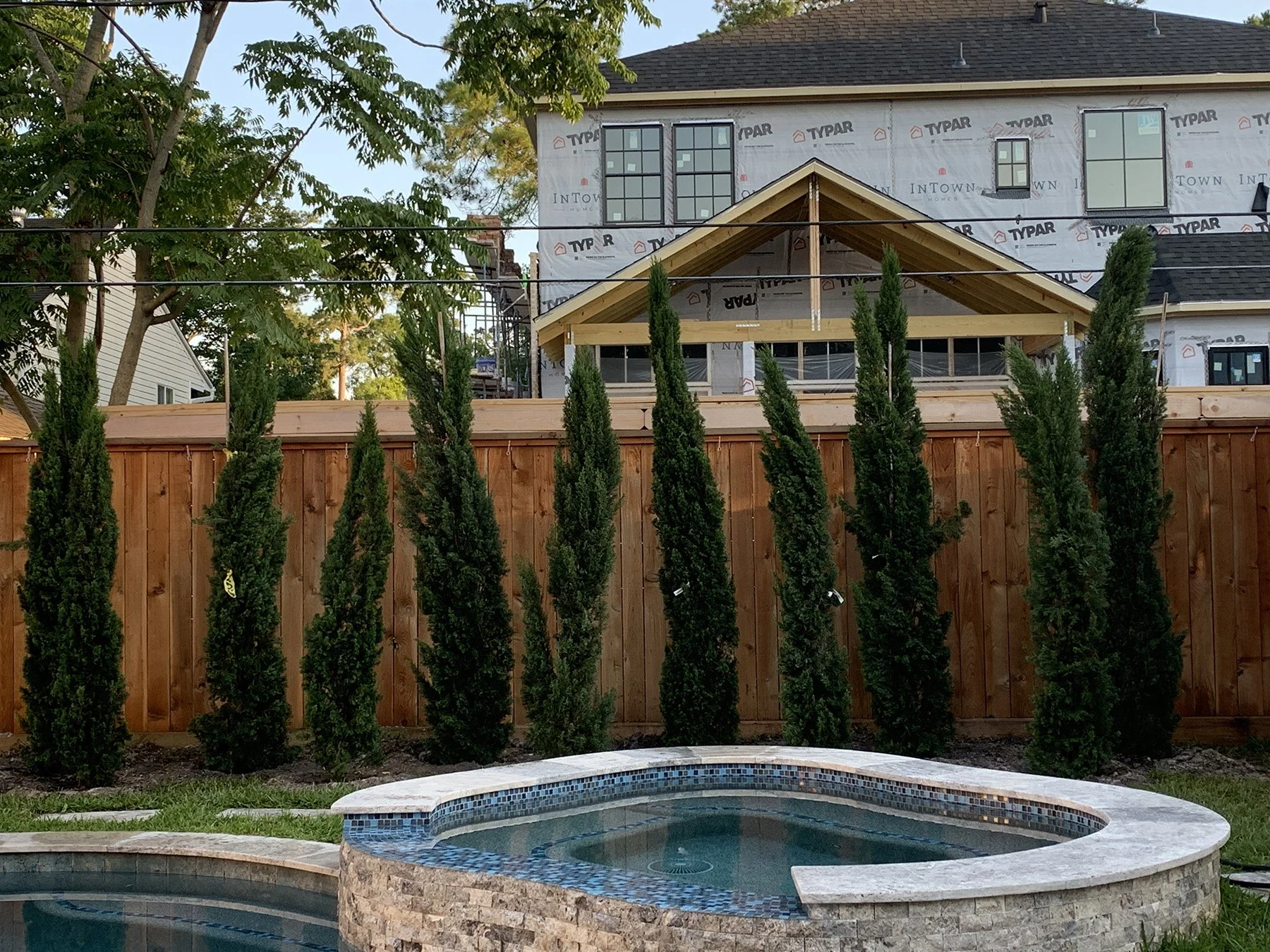
Tree Planting in Katy & Houston
Most tree problems we get called about started the day the tree went in the ground. Wrong species for the site, planted too deep, or put somewhere it was never going to have room to grow.
Getting it right the first time costs less than fixing it in fifteen years.
Right Tree, Right Place
Houston-area soil is heavy clay that swells when wet and shrinks when dry. Drainage is poor and the water table is high in a lot of neighborhoods. That rules out plenty of species people ask for, and strongly favors natives and well-adapted trees.
Species that generally do well here:
Live oak, the backbone shade tree of the Gulf Coast
Southern red oak, shumard oak, and other native oaks
Bald cypress, which handles wet feet better than almost anything
Pecan, the Texas state tree, though it needs room
Cedar elm, tough and drought-tolerant once established
Species we steer people away from: Bradford pear, which splits apart at maturity, and anything needing sharp drainage it will not get here.
A tree planted too deep will decline slowly for years and nobody will know why. The root flare, where the trunk widens at the base, should be visible at grade after planting. Buried flares lead to girdling roots and rot.
We plant to the flare, not to the top of the root ball, and we do not overfill the hole with amended soil, which just creates a bathtub in clay.
Planting Depth Is What People Get Wrong
Placement Matters Too
Before anything goes in the ground we look at mature size, not nursery size. Distance from the foundation, the driveway, the septic field, overhead power, and the property line. A live oak that looks small in a pot has a canopy sixty feet wide at maturity.